CHENANI AND THE REVOLT OF 1857: UNCOVERING A DUGGAR CONNECTION
The uprising of 1857 stands as one of the most debated and symbolically charged events in the history of colonial India. Described variously as a “sepoy mutiny,” a “popular revolt,” and most powerfully as the “First War of Independence” by thinkers like Vinayak Damodar Savarkar, the movement represented a complex convergence of political discontent, economic exploitation, military grievances, and cultural anxieties. While colonial historians such as John William Kaye and George Bruce Malleson reduced it to a mere military mutiny, later nationalist and post-colonial interpretations have emphasized its wider social base and anti-colonial character. The participation of dispossessed rulers, peasants, artisans, and soldiers imparted to the revolt a depth that went far beyond isolated rebellion, transforming it into a serious challenge to British authority.
Within this broader upheaval, the figure of Rao Saheb emerges as a crucial yet relatively understudied actor. Closely associated with Nana Saheb, Rao Saheb assumed an important leadership role, particularly in the later phases of the revolt. As British forces gradually regained control over key centres, he, along with other rebel leaders, sustained resistance through mobility and tactical withdrawal. His movements across regions after the collapse of organized resistance reflect both the resilience of the rebel leadership and the fragmented, yet persistent, nature of anti-colonial opposition.
In this context, the princely state of Jammu and Kashmir presents an interesting case. Ruled by Maharaja Gulab Singh during the revolt, the state did not emerge as a centre of rebellion. The absence of a widespread uprising in Jammu and Kashmir can be attributed to multiple factors, including its recent consolidation as a princely state, the firm control exercised by the Dogra administration, and its geopolitical distance from the main theatres of rebellion.
Yet, the region was not entirely detached from the aftershocks of 1857. The reported capture of Rao Saheb from Chenani in the Jammu region introduces a significant, though often overlooked, dimension to the history of the revolt. It suggests that even areas which remained politically stable were drawn into the wider web of events through the movement of rebel leaders seeking refuge. Chenani thus emerges not as a centre of insurrection, but as a peripheral space where the final chapters of resistance unfolded.
This article, therefore, seeks to situate Rao Saheb within the broader historiography of 1857 while foregrounding the significance of his capture at Chenani. By examining both the limited direct involvement of Jammu and Kashmir and its indirect connection through such episodes, it aims to contribute to a more nuanced understanding of the revolt’s geographical spread and the varied responses of different regions to the crisis of 1857.
Who was Rao Saheb? Rao Saheb, whose real name was Sita Ram, was son of Madhav Rao. He was adopted by the Peshwa Baji Rao II and was nephew of Nana Saheb. Rao Saheb was given the name of Pandurang Sadashiv Rao on his adoption. Anand Swarup Mishra writes in his book “Nana Saheb Peshwa and the Fight for Freedom”, that Rao Saheb was proclaimed Peshwa on June 3, 1858 at Gwalior.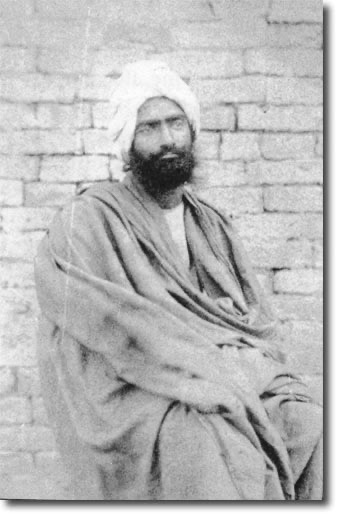
As per the information given about Rao Saheb in “Who’s Who of Indian Martyrs”, Published by Publication Division, Ministry of Information and Broadcasting, Government of India, he played a leading role in organising and executing the Great Revolt against British rule at Kanpur in 1857. He played a key role in the siege of Kanpur. He led the rebel troops against the British army and expelled them from Kanpur. He fought against the British at Kunch and Kalpi, but had to withdraw towards Gwalior. He along with his associates was successful in capturing Gwalior in May 1858 and forced the Maharaja and his Dewan to flee to Agra. He occupied Gwalior Fort and took the Gwalior Army under his command. Nana Sahib was proclaimed the Peshwa and Gwalior was ruled by him for some time with the help of Tatya Tope and Maharani Lakshmi Bai of Jhansi. Acting on behalf of Nana Saheb, Rao Saheb often gave direct orders to mility commanders like Tatya Tope. When Britishers pushed for the capture of Gwalior, Rao Saheb fought bravely against the British army under Sir Hugh Rose, but was forced to retreat.
After the loss of Gwalior to the British, Roa Saheb left Gwalior along with Tatya Tope and some army. They were later joined by Firoz Shah. Rao Saheb and Feroz Shah separated from Tatya Tope and took refuge in the jungle of Sironj, which was also discovered by the British and the two had to flee from the jungle. Attempts were made by the British to secure the surrender from Rao Saheb, but Rao Saheb preferred not to surrender on the terms offered by the British.
Rao Saheb wandered for a few days disguised as a mendicant in the jungles of Gwalior and Tonk with his three followers. After that he met with his wife and mother-in-law and decided to proceed towards Pushkar. After this, he went to Thaneshwar, then to Jaipur and Delhi. Then he went to Jawala ji and from there to Kangra. From Kangra he reached Pur Mandal and then proceeded towards Vaishno Devi. After visiting Vaishno Devi, he reached the state of Chenani and visited Sudh Mahadev. He had adopted the name of Lakshman Das Pandit. From there he had plans to go to Kashmir and with this objective in mind he stayed in the Chenani state in the Jammu region.
In the meanwhile, he sent his mother-in-law to Kashmir and stayed in Chenani with his wife who was pregnant at the time. Rao Saheb stayed at Chenani for three and a half months. There he used to visit the temple which was situated at a distance of three miles daily. One day he was going to the temple on his horse when he met with Bhima Rao, who had been with Tatya Tope. He stayed with Rao Saheb for a month and a half and told him that as the British Government was no longer after the revolutionaries, he had decided to go back. He left Rao Saheb but came back with the Deputy Commissioner of Sialkot, Mr. McNabb, by whom Rao Saheb was arrested.
Rao Saheb was sent to Kanpur where he was tried. The result of the trial was a foregone conclusion. He was found guilty on August 20, 1862, and was hanged. The place of his hanging is not still sure. D.V Tahmankar in his book “Ranee of Jhansi” writes that he was hanged at Bithoor but there are some scholars who consider that he was hanged at Kanpur.
In conclusion, the Revolt of 1857, whether interpreted as a mutiny or as the First War of Independence, was far more than a localized uprising. It was a widespread and evolving struggle whose repercussions extended into regions often absent from mainstream narratives. The career of Rao Saheb illustrates the tenacity of rebel leadership, particularly in the aftermath of the revolt’s apparent collapse, when resistance continued in scattered and mobile forms across the subcontinent.
While the princely state of Jammu and Kashmir, under Gulab Singh, did not emerge as a centre of insurrection, it nonetheless became historically significant through its indirect association with the closing phases of the revolt. In this regard, Chenani assumes a position of particular importance. The reported capture of Rao Saheb from Chenani transforms this otherwise quiet hill state into a site deeply connected with the last chapters of the 1857 resistance.
Chenani, therefore, is not merely a geographical footnote but a symbolic place where the fading embers of rebellion were finally subdued. It represents the transition from active resistance to imperial consolidation, marking the final link in the pursuit of one of the revolt’s key leaders. By foregrounding Chenani, this study seeks to expand the spatial understanding of 1857, demonstrating that its history is not confined to battlefields like Kanpur or Jhansi, but also embedded in lesser-known landscapes where its last results unfolded. This lesser known event brings Jammu and Chenani into the historical map of revolt of 1857 in a subtle yet meaningful way.
By: UDEY VEER ANTHAL (M.Phil in History and currently working in State Taxes Department, J&K)


Comments
Post a Comment