Major Gandharb Singh: A Dogra Hero of World War I
The history of the Dogra region is deeply intertwined with tales of military valour, sacrifice, and unyielding honour. Among the many brave souls who answered the call of duty during the First World War is Major Gandharb Singh of the 3rd Kashmir Rifles (Raghunath Regiment). His life story stands as a shining testament to the courage of Dogra soldiers on global battlefields.
Roots in Jammu and Family Background
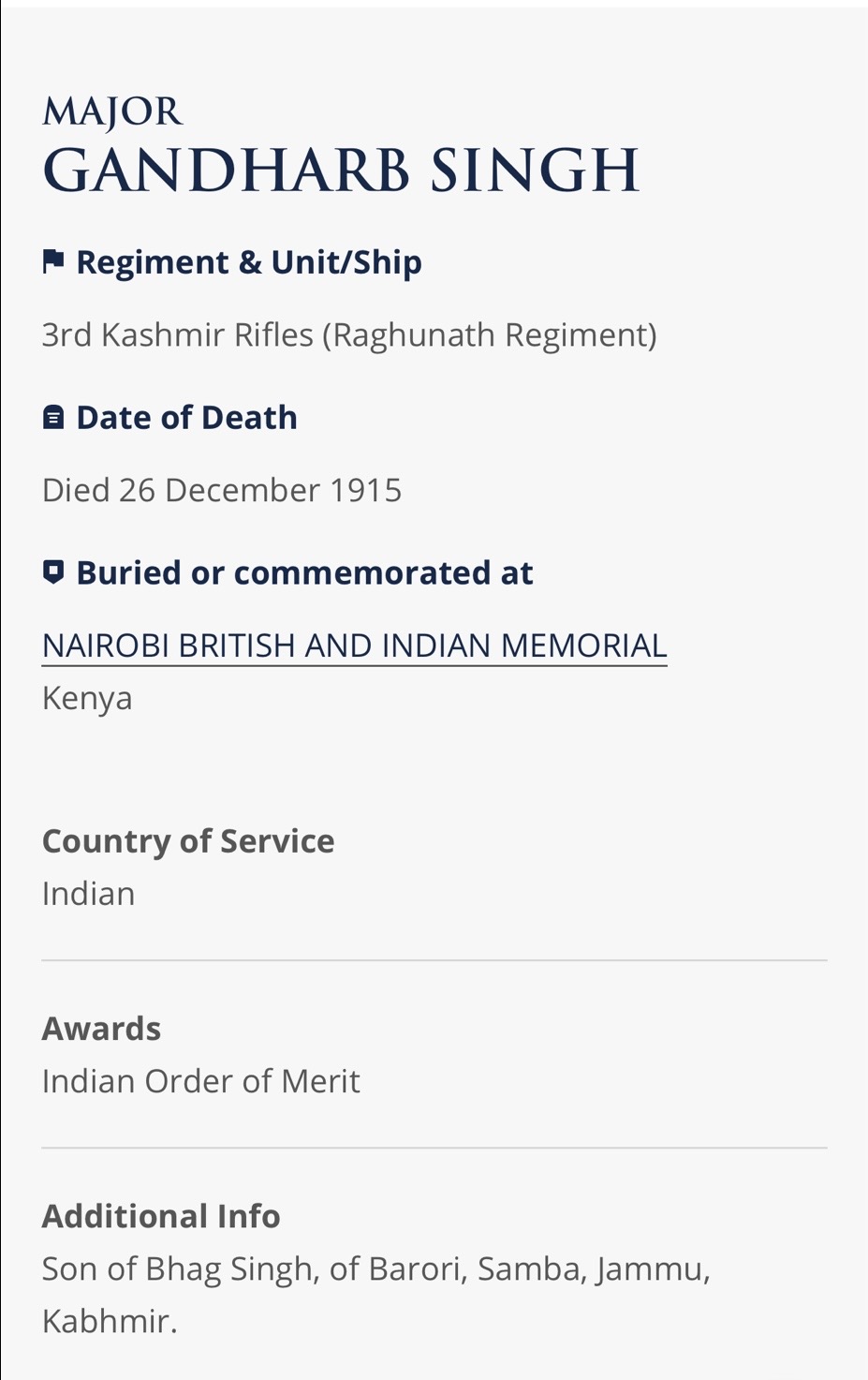
Major Gandharb Singh was a proud son of the soil from the Jammu region. He was the son of Bhag Singh, hailing from Barori, Samba. Coming from a tradition where martial service and duty to the motherland were paramount, he rose through the ranks to become a commissioned officer, leading men with distinction.
Service in the East Africa Theatre
During the First World War, Indian troops were deployed to various international fronts, facing extreme climates and gruelling conditions. Major Gandharb Singh served with great courage in the demanding East Africa theatre of war as an officer of the 3rd Kashmir Rifles (Raghunath Regiment). The regiment played a vital role in campaigns far from home, where officers displayed extraordinary leadership under fire.
Gallantry, Awards, and Supreme Sacrifice
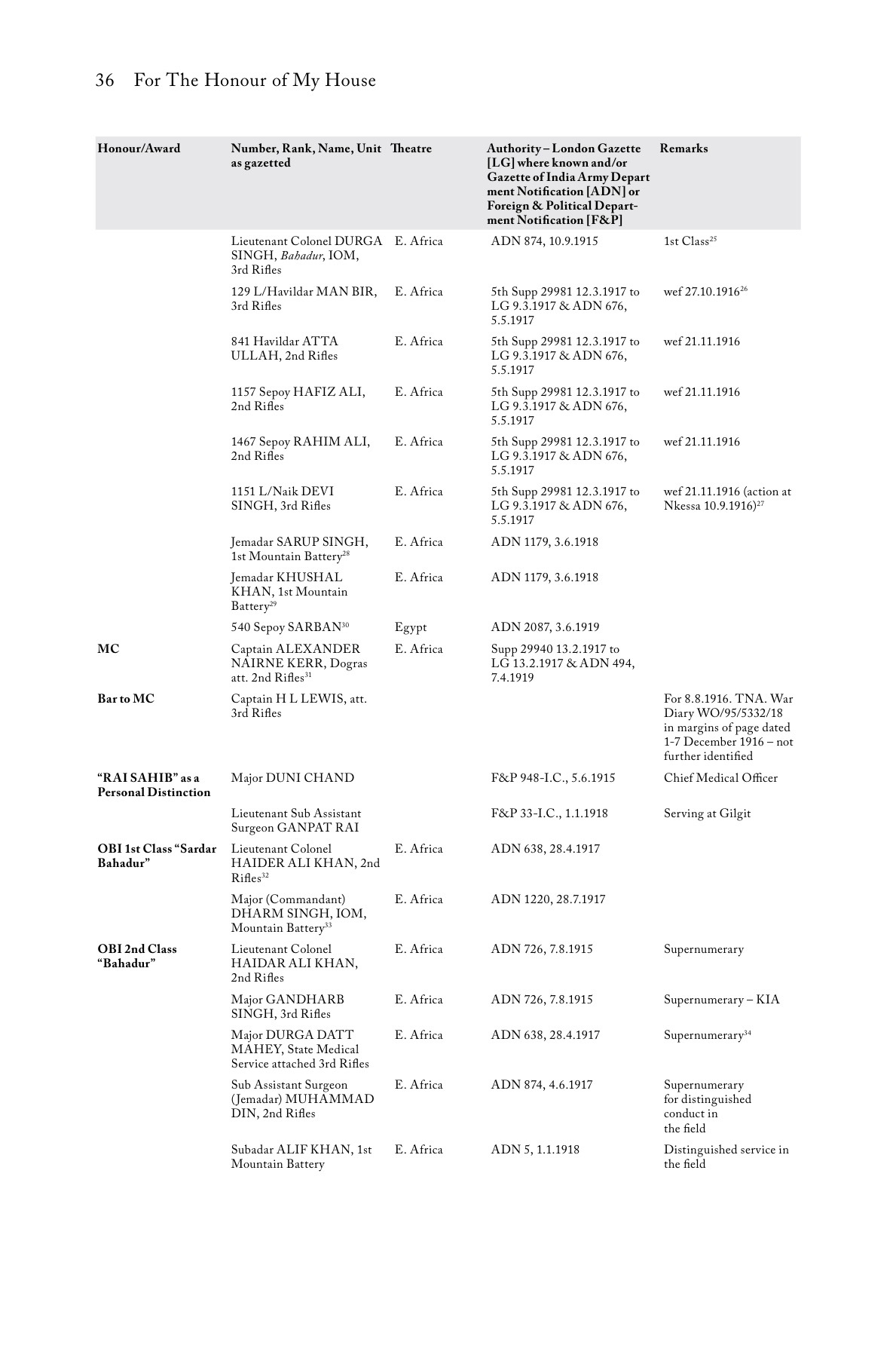
Major Gandharb Singh’s exceptional leadership and battlefield gallantry did not go unnoticed:
- Indian Order of Merit (I.O.M.): He was decorated with the I.O.M., one of the oldest and most prestigious gallantry awards of the British Indian Army, recognizing acts of conspicuous bravery.
- Order of British India (O.B.I.) 2nd Class ('Bahadur'): He was posthumously awarded the O.B.I. 2nd Class, which carried the coveted title of 'Bahadur' (The Brave).
Tragically, Major Gandharb Singh made the ultimate sacrifice while leading his troops, being killed in action on December 26, 1915.
Legacy and Commemoration
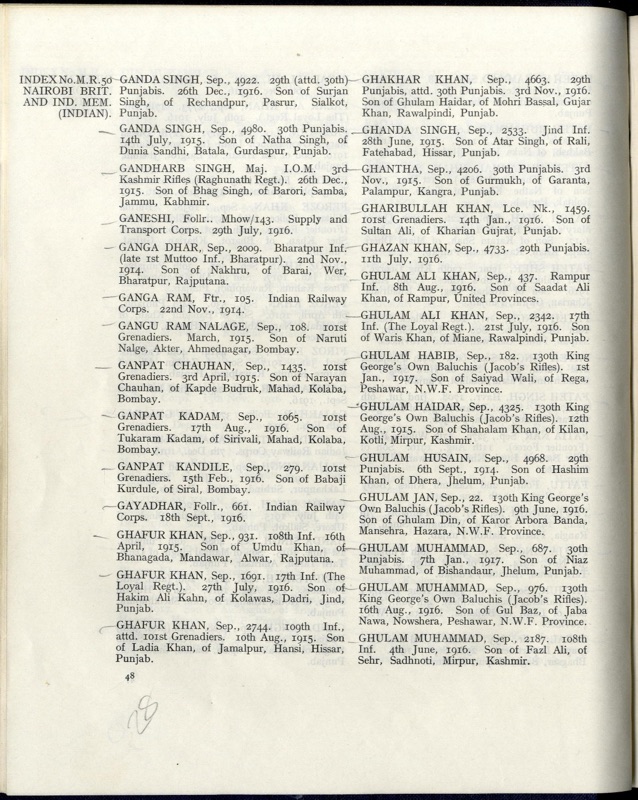
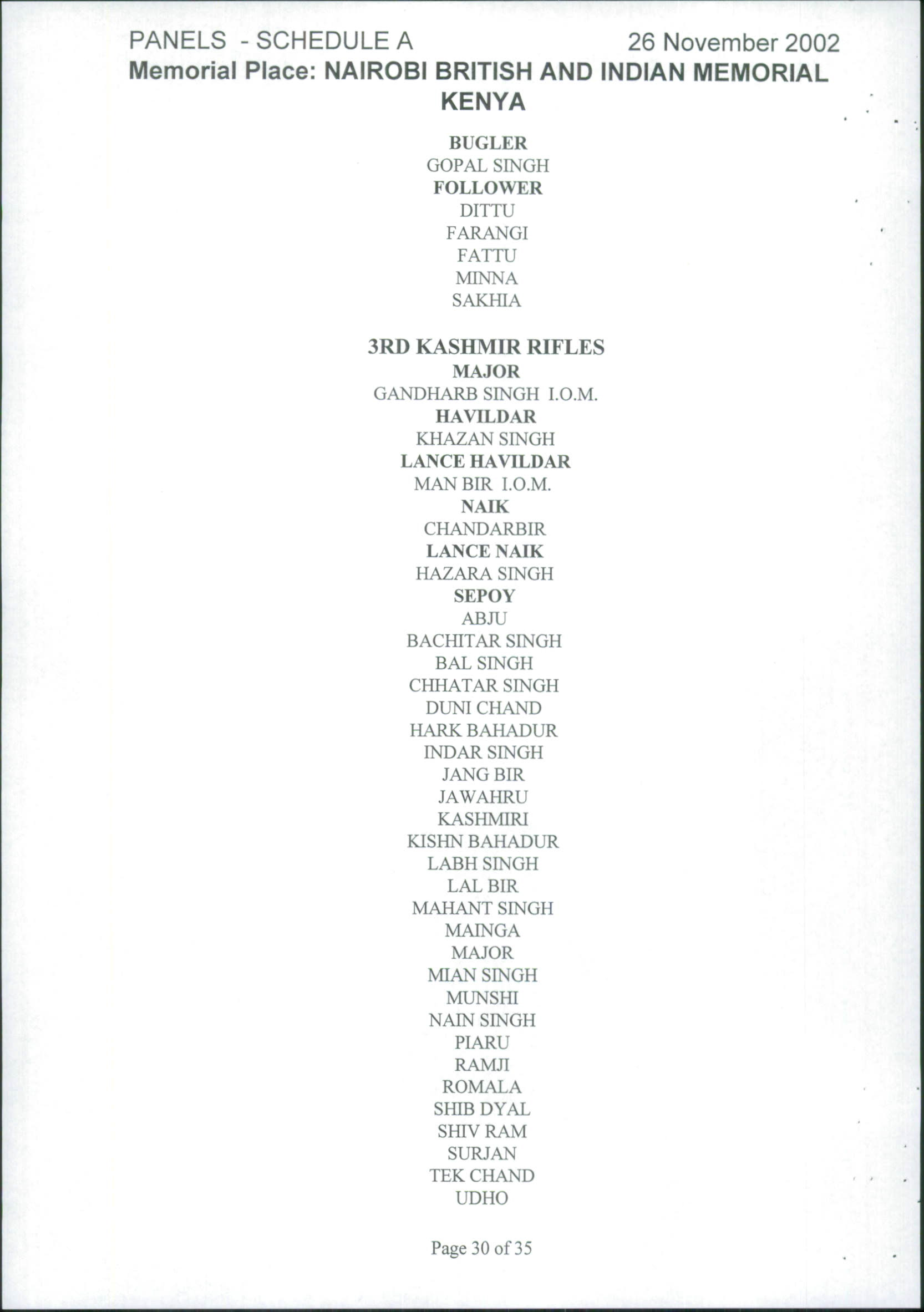
Though he fell far from home in East Africa, Major Gandharb Singh’s name and sacrifice are permanently etched in history:
- He is officially commemorated at the Nairobi British and Indian Memorial in Kenya.
- His name is proudly inscribed on Panel 9 (Stone No. 9) of the memorial site, ensuring that generations to come remember the valour of the 3rd Kashmir Rifles.
By: Udey Veer Anthal


Comments
Post a Comment