Sepoy Mahant Singh of Chenani: A Forgotten Dogra Soldier of the First World War
Dogra Heritage | Remembering the soldiers who made history
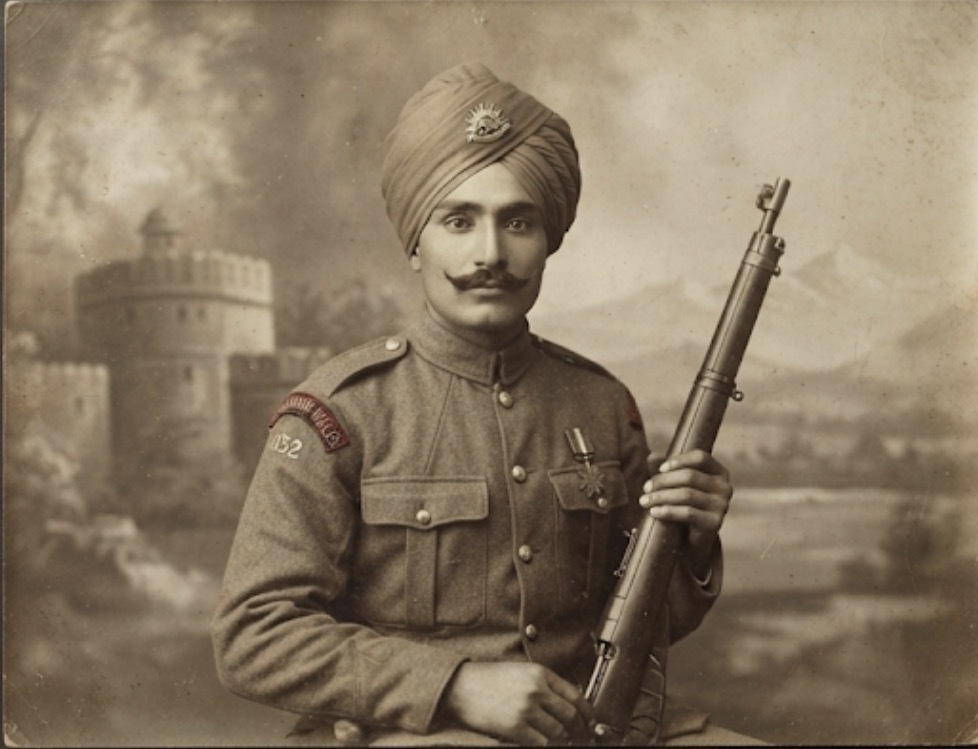
On 14 April 1915, Sepoy Mahant Singh, service number 1132, of the 3rd Kashmir Rifles, also known as the Raghunath Regiment, was killed in action in Kenya during the First World War. He belonged to Chenani, and his story connects the history of this small region of Jammu and Kashmir with a global conflict fought more than a century ago.
Today, his name survives in historical military records. Although many details of his personal life remain unknown, the available evidence gives us an important starting point for remembering his service.
From Chenani to East Africa
The First World War began in 1914 and involved countries across Europe, Africa, Asia and the Middle East. Indian soldiers served in several theatres of the war, including France, Mesopotamia and East Africa.
At that time, Jammu and Kashmir was a princely state with its own military forces. The 3rd Kashmir Rifles, also known as the Raghunath Regiment, formed part of this military history.
Sepoy Mahant Singh was one of the soldiers whose service took him far from his homeland. In April 1915, he lost his life in Kenya, then part of British East Africa.
The surviving casualty record associates his death with a place called Mzima. However, the exact military action in which he was killed has not yet been established.
A memorial in Nairobi
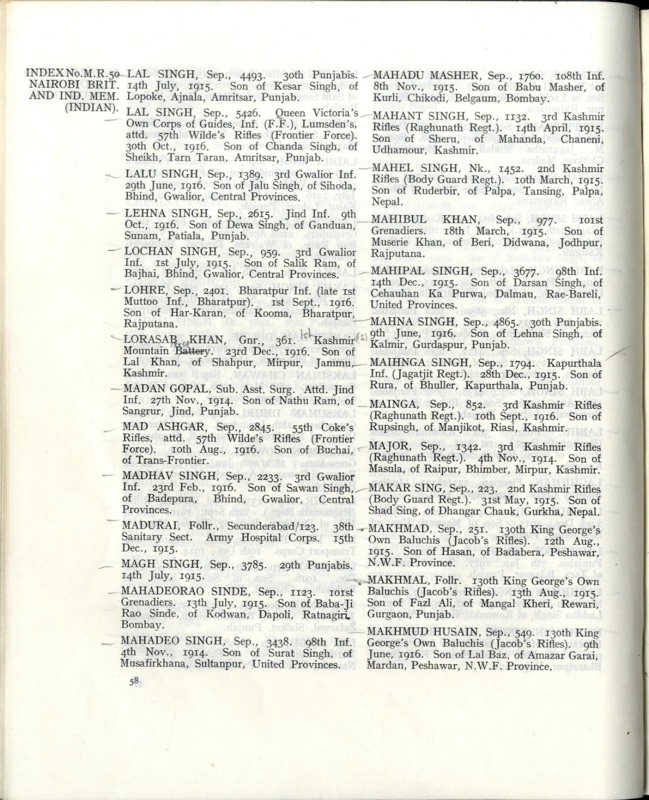
Mahant Singh is commemorated at the Nairobi British and Indian Memorial, associated with Nairobi South Cemetery in Kenya.
The memorial honours servicemen who died during the East African campaign and whose graves were not known or could not be individually identified. His entry preserves his name, rank, service number, regiment and date of death.
It is a remarkable link between Chenani and East Africa. More than a hundred years after his death, his name remains part of the historical record of the war.
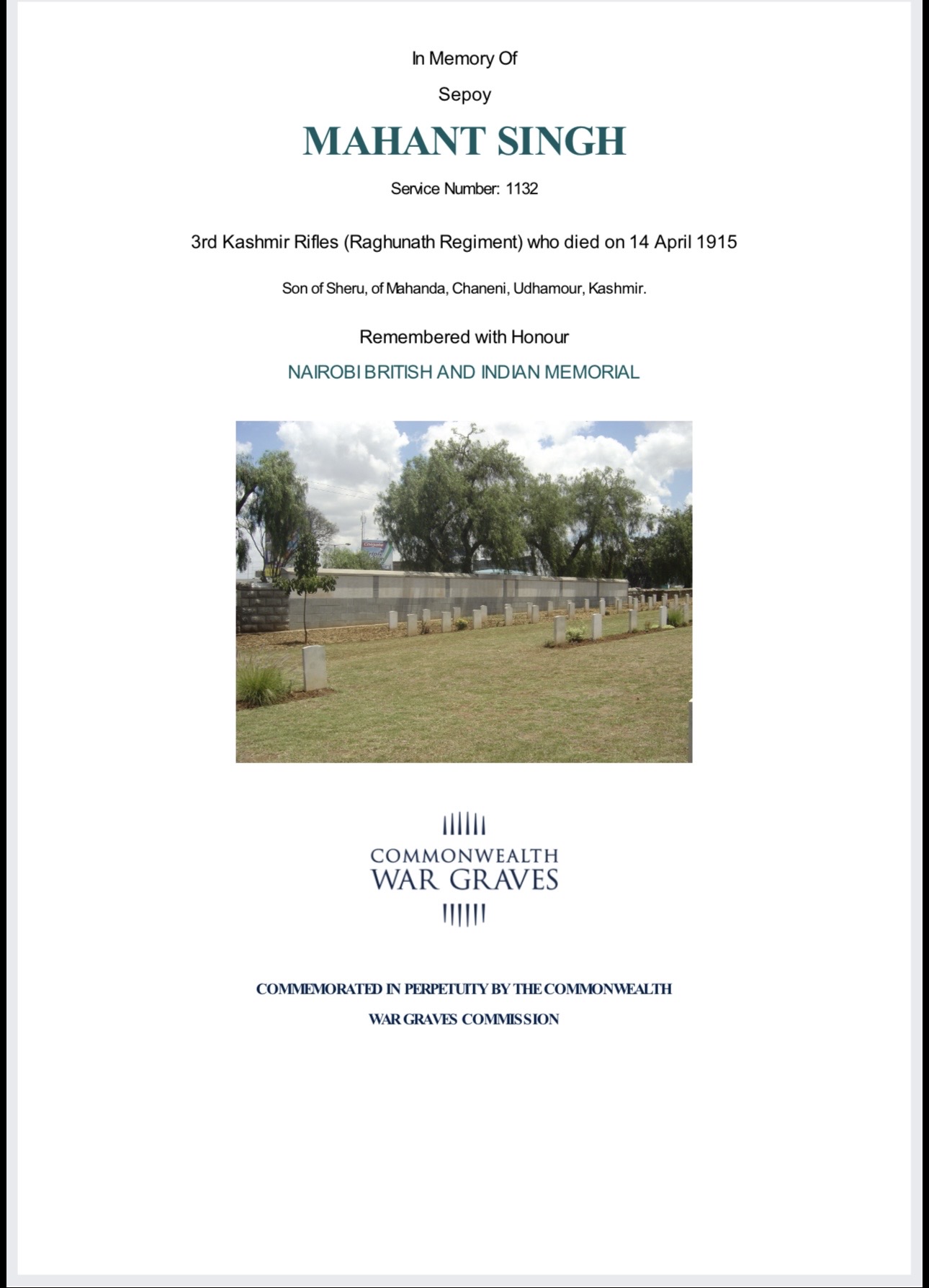 |
| Credit: Commonwealth War Graves |
The records behind his story
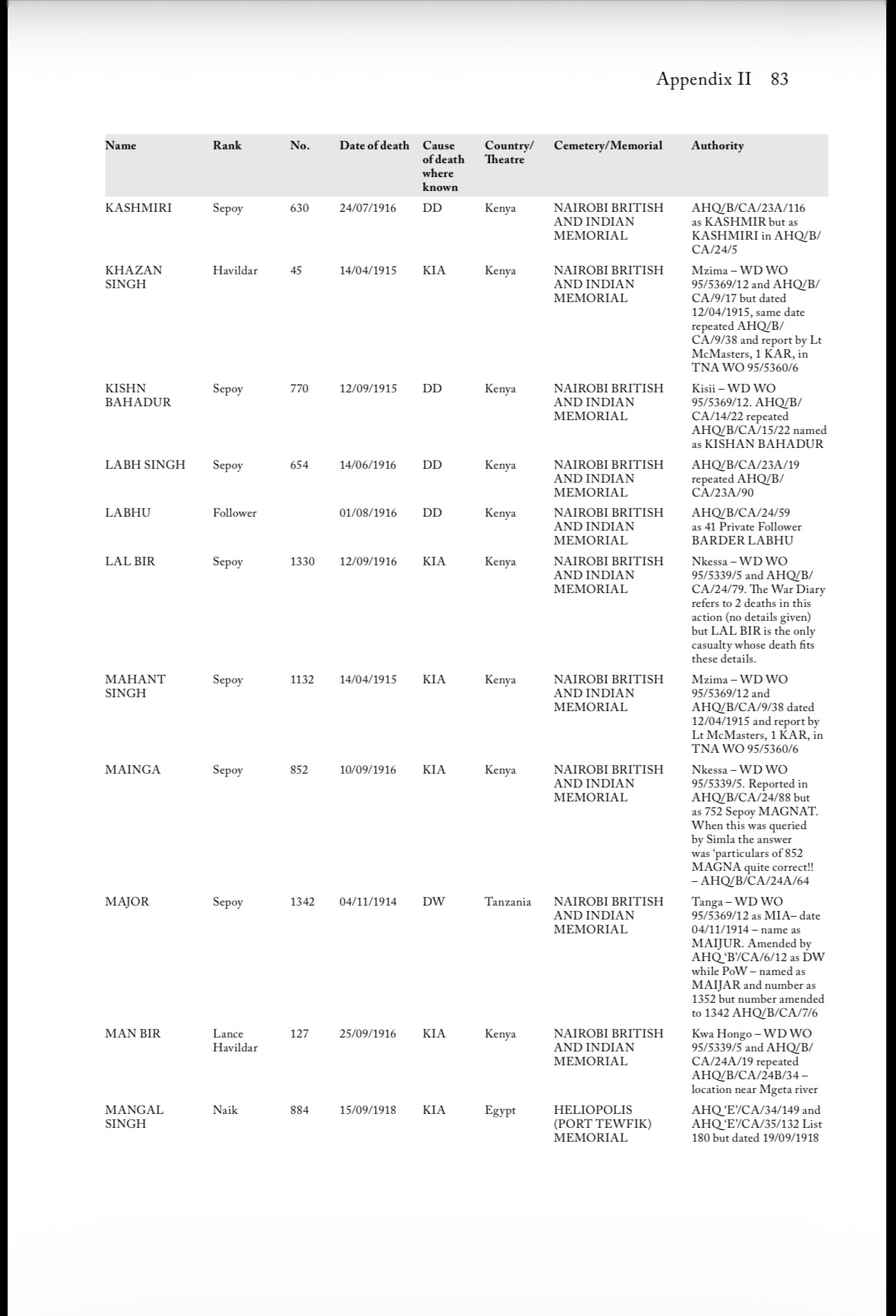
The available historical research cites a war diary, reference WO 95/5369/12, and a report by Lieutenant McMasters of the 1st King’s African Rifles, reference WO 95/5360/6. These documents may help establish the circumstances of the action at Mzima.
An Army Headquarters casualty record dated 12 April 1915 is also cited, while Mahant Singh’s recorded date of death is 14 April 1915. The relationship between these dates requires examination of the original documents.
His family background, age, enlistment details and exact circumstances of death remain subjects for further research.
Remembering a soldier from Chenani
Military history is often told through famous commanders, major battles and great victories. Yet the history of ordinary soldiers deserves equal attention.
Mahant Singh’s record reminds us that the people of Jammu and Kashmir were connected to events taking place far beyond their homeland. His service was part of the wider history of Indian soldiers who served during the First World War.
For Dogra Heritage, remembering Mahant Singh is also an invitation to continue researching the military history of Chenani and the former princely state of Jammu and Kashmir. Old war diaries, memorial inscriptions, family documents and regimental records may help recover more of his story.
We may not yet know his age, his family or the precise circumstances of his final action. But we know his name, his regiment and the date on which his life was lost.
Sepoy Mahant Singh
Service No. 1132
3rd Kashmir Rifles (Raghunath Regiment)
From Chenani, Jammu and Kashmir
Killed in action: 14 April 1915, Kenya
Commemorated at: Nairobi British and Indian Memorial, Kenya
More than a century later, a soldier from Chenani deserves to be remembered—not merely as a name in an old military record, but as part of our shared history.
Dogra Heritage remembers Sepoy Mahant Singh. Lest we forget.
By. Udey Veer Anthal


Comments
Post a Comment